We all look for options when starting out, don’t we?
If you design amigurumi, garments, or accessories for crochet or knitting, you’ve likely been there: you want to sell your PDF patterns, so you open a shop on traditional e-commerce platforms like Etsy, only to feel lost among the high fees, the ocean of physical products, and the noise. Or worse, you end up dealing with zero protection over your own original work.
Today I want to share my personal experience with Ravelry and why I’m convinced it is, by far, the best website and safest place to sell your handmade patterns if you are a designer or fiber arts entrepreneur.
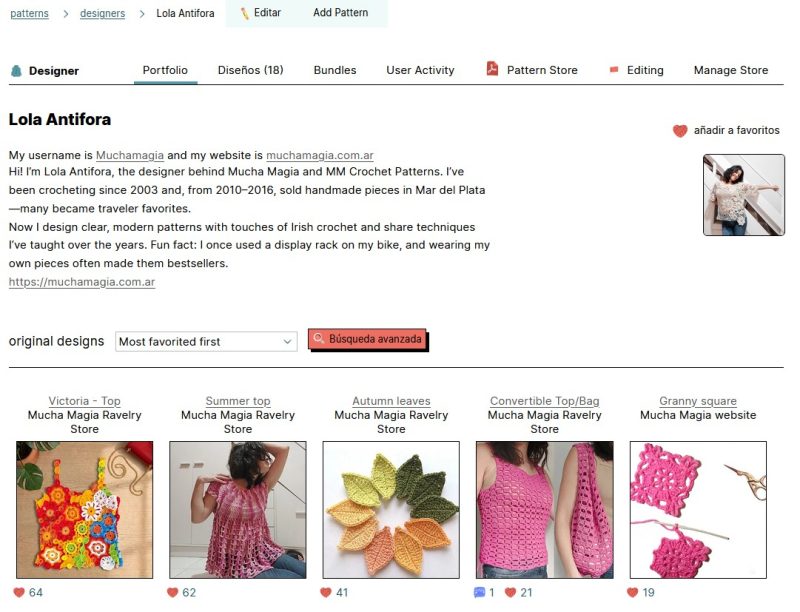
My Journey with Ravelry (and How It Saved Me from a Serious Issue)
I originally opened my Ravelry account back in 2020, but it wasn’t until around 2024 that I truly focused on loading and properly organizing all my items. And the impact was immediate.
Beyond being a wonderful space built 100% for our fiber arts community, it gave me a tool I didn’t know I needed: implicit legal protection for my work.
Unfortunately, several external websites and online shops have plagiarized my work, stealing direct images of my products from my website and other stores. Do you know what saved me? On Ravelry, there is a public, precise, and unalterable record of the exact publication dates for every pattern and image. Thanks to that, I was able to irrefutably prove my authorship against copyright infringement claims. For that reason alone, the value this platform provides in defending our creative work is immeasurable.
Why Is Ravelry So Different from Other Platforms?
If you come from traditional e-commerce, Ravelry will surprise you because it isn’t built on a corporate or aggressive business model. It is an independent, deeply inclusive, collaborative platform designed by and for makers.
There are no strange algorithms forcing you to buy ad placements just to get noticed. People discover your patterns because the community is actively searching for real projects, looking at other makers’ project notebooks, and valuing indie design.
💡 Essential Tips for Building a Successful Pattern Shop on Ravelry
If you’re ready to take the leap and set up your pattern store, keep these key tips in mind to get off on the right foot:
Clean Photos (No Overlaid Text): On your pattern cover photos, avoid adding large logos, text, or invasive watermarks. Ravelry favors clear aesthetics where the craft itself takes center stage.
Organic Titles (Avoid Keyword Stuffing): Unlike Etsy or Amazon, you should not include words like “pattern”, “crochet”, or “knitting” in your product titles. Why? Because the platform already knows it’s a pattern through its internal filters and tags. Keep it simple with the name of your design (e.g., “Clarity Cardigan” instead of “Clarity Cardigan Crochet Knitting Pattern”).
Take Advantage of the Yarn & Technique Database: Accurately classify yarn weight, needle sizes, and yardage. This is how buyers search and filter to find exactly what they want to make.
Engage with the Community in Forums: Ravelry is, above all, a social network. Participating in groups, answering questions, and connecting with other makers is the best organic way to grow.
(On a personal note, I’m just starting to spend more time engaging in the forums because I’ve been going through a somewhat difficult personal situation, but the warmth and respect in those discussions is something you simply won’t find anywhere else!)
Grab My Patterns with a Special Discount!
To celebrate our growing community and help you check out my design catalog on Ravelry, here are some special coupon codes you can apply directly at checkout:
MMCP30: Get 30% off your purchase (valid through March 31, 2027).
Newitem20off: Use this coupon with no limits through September 30, 2026 to buy items in my shop—as many times as you like!
👉 LINK TO MY RAVELRY STORE: https://www.ravelry.com/stores/mucha-magia/